
“I Always Wait for the Next Shoe to Drop”
I’m never surprised when something goes wrong.
I’m surprised when it doesn’t.
There it was.
Suddenly, I felt an almost disorienting rush. My chest felt too small for just a second. My mind went into utter disbelief. Wait, did I just dream this? Did I just imagine it? My heart was beating so fast, and my mind began racing. Who will I call first to tell?…
I put the phone down and just sat there. I had been waiting for this call for years. I had imagined it often enough that the real thing felt strangely unreal. As if it had happened to someone else, and I was only briefly stepping into it. Did that really just happen? It was far too easy. Things don’t usually come easily to me.
Where is the trap? This thought was sneaking in almost immediately. I tried to ignore it and didn’t want to talk myself out of the joy and excitement I was feeling, but instead, this thought got louder and bigger. I know this so well. As if a part of me just can’t have me feeling happy, carefree, and myself. No, it has to raise its head and ask me, “Did you really lock the door before you left the house? How sure are you…”
I rewound internally. Did I just have that call that I was dreaming would happen one day? The phone was still a bit warm and damp from being held. Ok, well, I guess I was just on the phone, and the good news was still true. Nothing had changed. The call had happened. The words had been said, I kept trying to convince myself. And yet something in me had already stepped half a pace back. As if leaning in fully would be careless. As if enjoying this without restraint would be tempting fate.
I felt alert. My childlike joy was gone. My innocent, carefree mood was gone, my dopamine rush was gone- pouf.
I was back on planet Earth, weighing pros and cons, rights and wrongs, doing the maths.
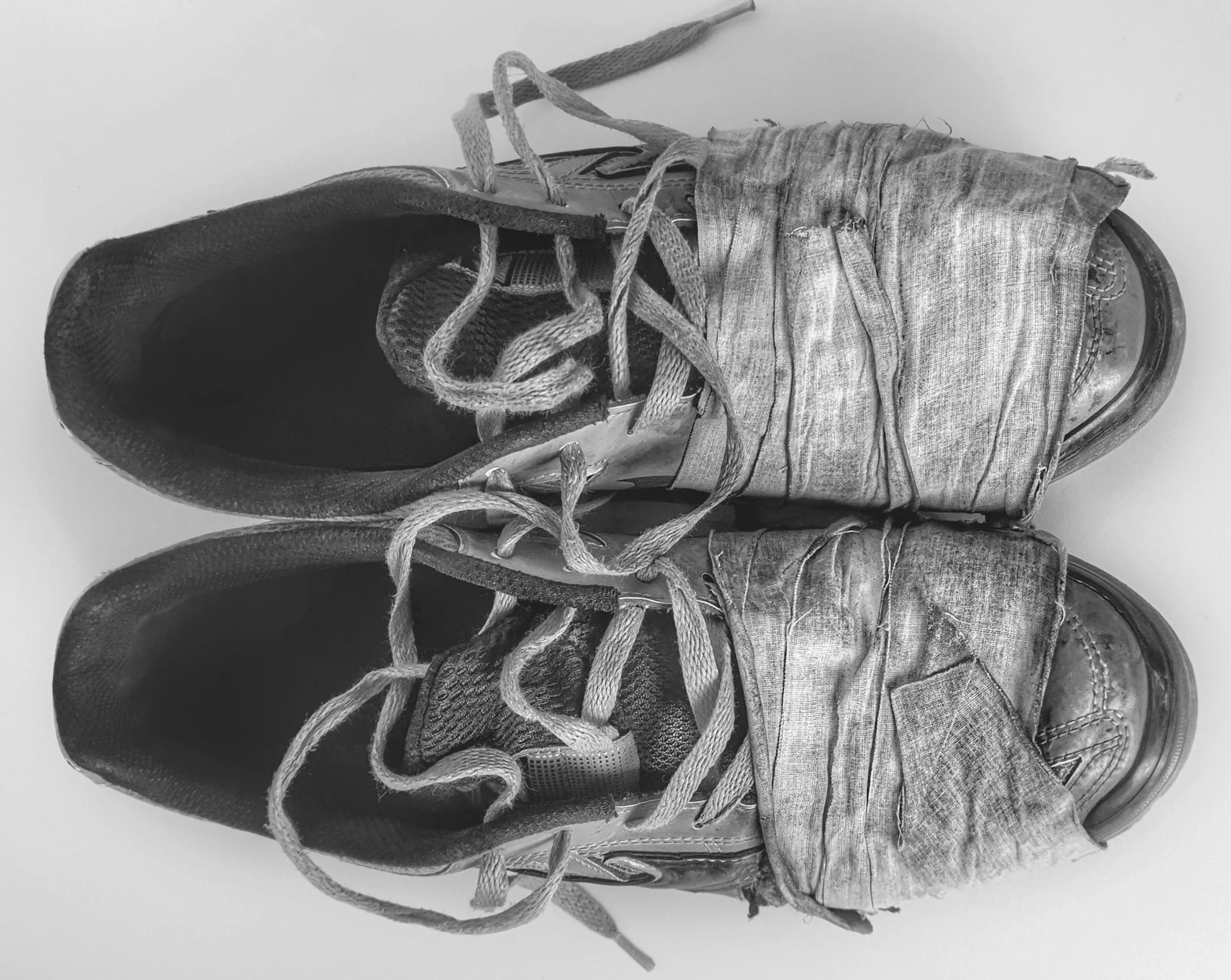
You can feel genuine excitement and still scan the edges of it. You can enjoy the moment and simultaneously watch it, as if from the side. You hold the good news carefully, like something that might bruise if handled too freely.
Nothing inside can celebrate wildly anymore. Something else takes over instead, asking questions. It feels like the internal border protection is policing your happiness.
How solid is this?
What could still shift?
What haven’t I seen yet?
You don’t want to ruin the moment consciously. But it all goes so fast that you don’t seem to be able to control it. You learned to call yourself “staying realistic,” and you try to make it out to be a quality of your personality. You are a grown-up, you have been around the block, and experience taught you to wait and see first.
At some point, people start noticing this pattern. They’ll say things like, “I don’t really settle,” or, “Even when things go well, something in me stays switched on, or, ”I always wait for the next shoe to drop.” And this is the good news in a way. Because once they notice that pattern, they feel that this is not the way life should feel. At first, they can justify this as being sensible and sharp. And it even makes sense in a lot of places. But after a while, it becomes a disruption, a problem that makes every lightness feel heavy. And that dissonance and discomfort can lead to change and personal growth.
Pain demands a response. Adjustment. Attention. It reorganises how you move through the world. It has taught your system something important; it earns credibility.
Pleasure doesn’t ask for the same thing. It doesn’t require adaptation. It doesn’t force recalibration. It often passes through without leaving much of a trace. But it also opened the gates to your innate trust. You put down the shield, even if it is just for a moment, it’s put down, you are open, vulnerable, trusting, and BAM, something or someone has hit you right in the heart, right at your most precious.
That’s how it all began.
But, hey, that vigilance you feel is not a character trait.
It’s not realism.
And it’s not wisdom earned by suffering.
It’s memory.
The kind of memory that lives in your body, in your timing, in how fast joy is allowed to rise before it’s shut down again.
Your system learned, very precisely, that openness is where you once got hurt. That trust was expensive. That being unguarded came with consequences. So it adapted. It became fast, sharp, and very protective of you. It learned to believe pain more than pleasure, because pain once mattered more.
That learning never happened in words. Which is why words don’t undo it.
You can understand this pattern perfectly and still feel it hijack your moments. You can see it coming and still not stop it. Because this isn’t a thinking problem. It’s not even an emotional one in the way people usually mean that.
It’s a memory problem.
And memory, when it’s stored this way, doesn’t respond to pure insight.
This is where the change work I do with clients begins.
I won’t tell you to trust life more. And I am not teaching you to think differently.
But I'm helping your system finally update what it still treats as dangerous — even when your life no longer is.
When that happens, something very subtle changes.
Joy no longer needs to be managed.
Calm no longer feels suspicious.
And the present moment finally gets to be just that: the present.