

You Don’t Just Think About Things. You Place Them.
How your mind organizes people, situations, and experiences, and why it matters.
You probably know this feeling: There is no actual problem in front of you, nothing has happened, and no one has said anything.
And still… something about an upcoming situation already feels heavy.
Perhaps you are ruminating about a conversation you'd better have, but don’t want to.
Or there is this meeting with the boss, authorities, or family members that is sitting in your calendar like a threat.
An upcoming event that should be manageable, but somehow isn’t.
You keep thinking about it. You rehearse it at night, when you need to sleep and rest. You feel your body tensing up and your heart racing before anything even exists.
This is often described as overthinking, social anxiety, or feeling intimidated by certain people. But those labels don’t really explain what is happening underneath. Those anticipatory, anxious feelings and thoughts are not “just how I am.” They are patterns. And patterns can change.
Most people assume their reactions are simply a direct response to what is happening around them. You meet someone and feel uncomfortable, you think about a situation and feel pressure, or you remember something from years ago, and it still carries a certain weight. It all feels immediate and logical, almost as if it were a fact. That is just how it is.
But if you look a little closer, that explanation starts to fall apart.
Your mind does not store people, situations, or memories as neutral pieces of information. It organizes them, and it does so in a very specific way. Not through words or categories, but through spatial relationships. In other words, your mind places things somewhere.
Some people feel as if they are above you, which tends to come with pressure or a sense of needing to perform. Others feel too close, which can make you tense or slightly on edge. Some feel distant, which often leads to a sense of disconnection or indifference. What is interesting is that the emotional response follows that internal positioning. It is not the other way around.
This is not a metaphor or a poetic way of describing human experience. It is a model developed by Dutch psychologist Lucas Derks, known as Social Panorama. His work shows that we mentally organize people in space and that this internal structure has a direct impact on how we feel about them.
Once you start noticing this, it becomes difficult to ignore. Because it does not stop with people.
The same mechanism applies to situations, to your past, to your future, and even to how you experience yourself. Your mind creates a kind of internal map, and everything has a position within it. Some things feel close and intense, others feel far away and less relevant. Some feel large and dominant, others feel small and manageable.
None of this is random, and most of it happens without conscious awareness.
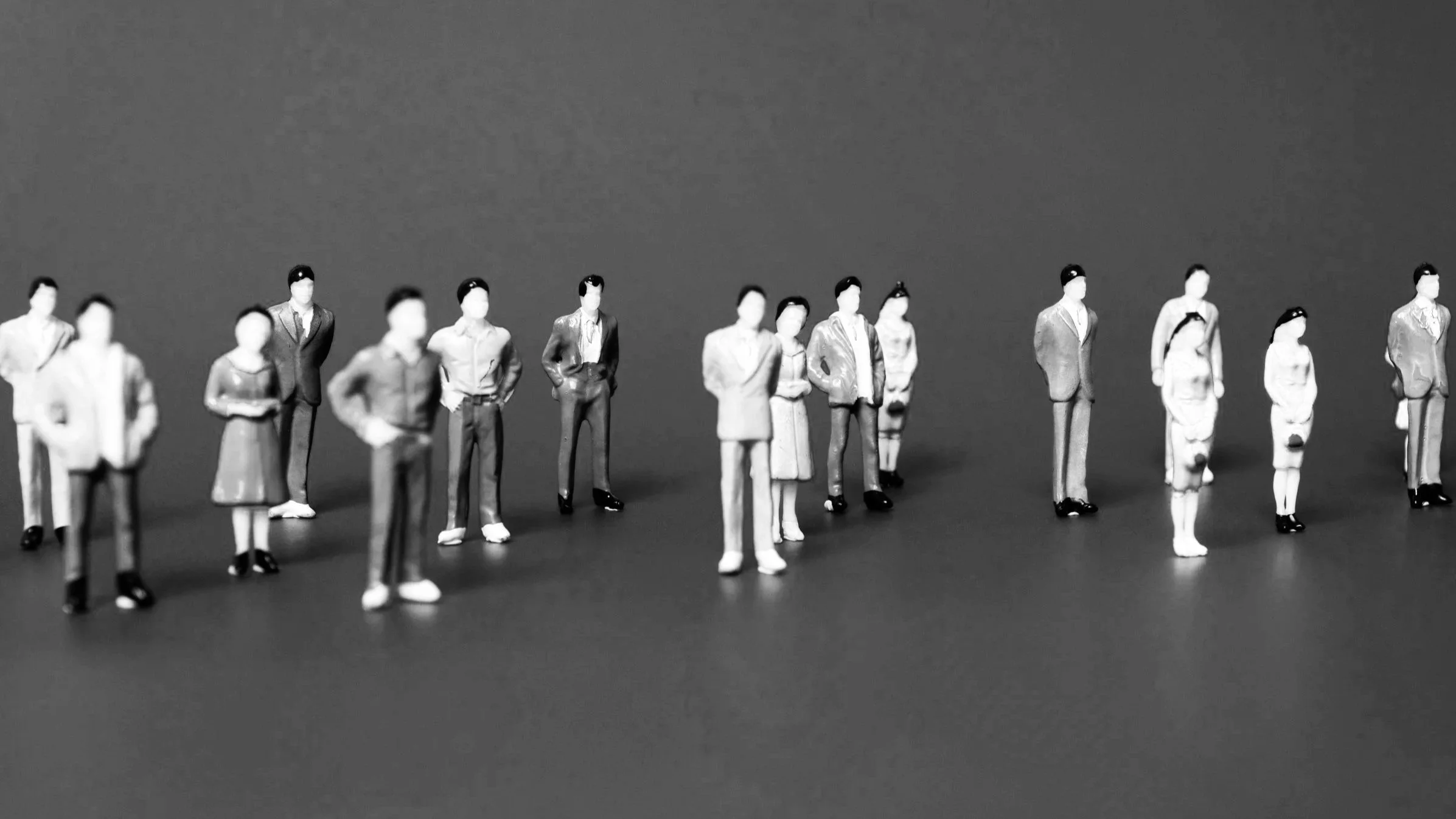
Take a moment and think of a situation that currently has a bit of weight to it. It does not have to be dramatic. It could be a conversation you have been postponing or something coming up that you would rather avoid. If you pay attention, you will notice that this situation already has a place in your mind. It might feel as if it is right in front of you, or slightly off to the side, but still pulling your attention. Whatever position it takes, it isn’t neutral. It shapes how the situation feels before anything has even happened.
This is where most people go in circles. They try to change their reaction by thinking differently about the situation. They try to be more rational, more positive, or more in control. Sometimes that helps for a moment, but the underlying structure remains unchanged. As a result, the feeling tends to return.
What changes things more reliably is not the content of the thought, but the structure behind it.
Once you understand that your experience is organized in this way, you start to see that what feels fixed is often not fixed at all. It is simply consistent. Your mind has learned to place certain things in certain ways, and that pattern repeats.
In my work, this becomes very practical. Sometimes it is about how someone experiences another person. Sometimes it is about how they relate to themselves. And sometimes it is about a specific situation that is coming up and already feels heavier than it needs to. In each case, the entry point is different, but the underlying principle is the same. When the internal positioning changes, the emotional response changes with it.
You do not need to understand the full model to begin noticing this in your own experience. It is enough to recognize that the intensity, the pressure, or the discomfort you feel is not just “there.” It is shaped by something. And that something can shift.
That is exactly where this becomes relevant. Not as an abstract idea, but as something that directly affects how you move through your life.
If you go back to that situation you had in mind at the beginning, you might notice that it is not just “there” waiting for you.
Most people try to deal with this by preparing more, thinking more, or trying to control how they will show up when the moment comes. That can help on the surface, but it rarely changes the underlying experience.
What changes things more reliably is adjusting the structure that creates that feeling in the first place. Because you’re not reacting to the situation itself, but you’re reacting to how your mind has already set it up.
That is exactly the kind of work I do when someone comes to me with a specific situation that is coming up and already feels heavier than it needs to.
If there is something on your horizon that already carries that kind of weight, you already know what this is about.
You can find the details here.